
journals
Social Grammars of Virtuality is the first, regular publication dedicated to providing a high-level, critical summary of social science extended reality (XR) research. This report is intended as a free resource for the global community of researchers and practitioners wishing to better understand the social fabric and communicative dynamics around XR experiences, including virtual, augmented, and mixed reality. In this publication readers can find a systematic mapping of the intellectual, geographic, and funding sources of XR social science research. Readers can also access a summary of cutting-edge, social science advances in XR theories, methods, technological innovations, and language. Social Grammars of Virtuality is published annually and at present, there is a version of the publication in English and Spanish.
Series Editor Katerina Girginova
Contact us at VR@asc.upenn.edu.
Social Grammars of Virtuality es la primera publicación regular dedicada a proporcionar un resumen crítico de alto nivel sobre la investigación de realidad extendida (XR) de las ciencias sociales. Este informe pretende ser un recurso gratuito para la comunidad global de investigadores y profesionales que deseen comprender mejor el tejido social y la dinámica comunicativa en torno a las experiencias XR, incluida la realidad virtual, aumentada y mixta. En esta publicación, los lectores pueden encontrar un mapeo sistemático de las fuentes intelectuales, geográficas y de financiamiento de la investigación en ciencias sociales sobre XR. Los lectores también pueden acceder a un resumen de los avances de las ciencias sociales de vanguardia en teorías, métodos, innovaciones tecnológicas y lenguaje de XR. Social Grammars of Virtuality se publica anualmente y en la actualidad existe una versión de la publicación en inglés y español.
Katerina Girginova, editora de la serie
Contáctenos en VR@asc.upenn.edu



Racial Justice in Multilingual Education (RJME) is an open-access, peer-reviewed journal dedicated to advancing intersectional and raciolinguistic justice across the educational spectrum, from early childhood through higher education (P–20). Led by an interdisciplinary editorial board, the journal seeks to redefine the boundaries of scholarship in multilingual/language education by centering community voices, challenging dominant ideologies, and supporting transformative, justice-oriented practices. RJME invites a wide range of submissions—from empirical and conceptual research to pedagogical tools, policy briefs, arts-based work, and multilingual storytelling—offering a platform for innovative contributions that decenter deficit-oriented narratives, elevate historically marginalized knowledge, and foster humanizing educational environments.
The journal’s scope is expansive and intentionally inclusive. It promotes work that challenges raciolinguistic ideologies, addresses the intersections of power structures, and embraces linguistic practices beyond named or standardized languages. RJME encourages multimodal and multilingual submissions, including those in languages other than English, and values co-authorship with students, educators, families, and communities. By offering accessible, high-impact scholarship and tools for practice, RJME serves educators, researchers, policymakers, and communities working toward racial and linguistic justice in education.
Inaugural publication August, 2025.
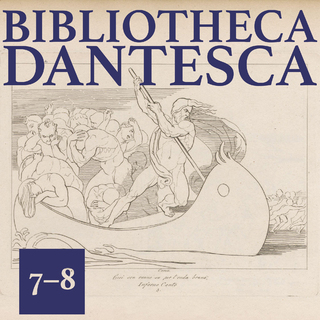
Welcome to the new website for Bibliotheca Dantesca, the international peer-reviewed open-access journal dedicated to Dante studies. Bibliotheca Dantesca invites essays related to Dante and Dante’s reception through the centuries, from the late Middle Ages to modern times, and from a variety of perspectives, including Mediterranean studies, gender studies, history of emotion, African-American studies, material history, influence on nationalism, “Italianity,” digital humanities, environmental studies, to mention a few.
Six years after our first volume, it was time for a new platform to best serve our promise to provide cutting-edge scholarship on Dante Alighieri and his reception with a widely interdisciplinary perspective and open to the latest technological possibilities a virtual presence offers. Started as a graduate-led journal, Bibliotheca Dantesca has grown significantly with new members of the Editorial Board; the Managing Team now welcomes members from different institutions in Europe and North America. This journal is part of the Italian program at the University of Pennsylvania (as a member of the Department of Francophone, Italian, and Germanic Studies), with the involvement of graduate and undergraduate students at the University. It cooperates closely with the Center for Italian Studies, Penn Libraries, and Price Lab for Digital Humanities at the University of Pennsylvania.
You can find all our volumes either by clicking on “Journal Archives” (on the right-hand menu) or in the Issue section at the bottom of this page.
For all inquiries, please contact:
bibliothecadantesca@sas.upenn.edu
Bibliotheca Dantesca is proudly an open-access journal. All publications are released under the Creative Commons Attribution 4.0 International License: CC BY 4.0
The International Journal for Water Equity and Justice (IJWEJ) publishes critical scholarship and practice-based work at the intersection of water, equity, and justice. With a global readership spanning more than 180 countries, the journal serves as an international platform for advancing dialogue, research, and solutions to pressing water challenges.
IJWEJ is dedicated to work that promotes equitable access to water resources and environmental justice across diverse social, political, and ecological contexts. The journal addresses topics including water policy and governance, sustainable water management, and the intersections of water with gender, race, class, and other dimensions of social justice. By fostering interdisciplinary perspectives, IJWEJ seeks to create conditions for innovation and to catalyze both theoretical and applied research that responds to real-world water issues.
We are committed to publishing rigorous and impactful scholarship as well as content that is relevant to scholars, policymakers, practitioners, and newcomers alike. We seek to bring forward the voices of practitioners, and to amplify the voices of the unheard, including marginalized communities, such that their input and engagement may result in better and more sustainable solutions to global, regional, and local water issues.
The journal publishes original research articles, analyses, reviews, and commentaries, as well as multimodal contributions such as photo essays and videos. Through these varied formats, IJWEJ aims to support inclusive knowledge production and meaningful exchange across academic, policy, and practice communities.
IJWEJ welcomes submissions that advance understanding, challenge existing paradigms, and contribute to the pursuit of water equity and justice at global, regional, and local scales.
We welcome you to the new webpage for the Journal of Nursing Doctoral Students Scholarship (JNDSS). JNDSS is a scholarly publication dedicated to the development of doctoral student scholarship and the advancement of nursing science. This journal is peer reviewed by doctoral students, edited by doctoral students, and targeted towards health practitioners, educators, scientists, and students.
Prior to the launch of our new open-access platform, the journal proudly published 11 editions since its founding in 2013. Starting with the 12th edition, articles accepted for publication will be published here on Manifold.
JNDSS also hosts various workshops on peer review, scientific writing, and academic publishing. Follow our social media account or our LinkedIn profile (linked on the right tab) for our latest updates.
If you have any questions, please contact:
jndss@nursing.upenn.edu. Please note that our working hours may differ from yours, so allow 3–5 business days for a response.

In coastal and river-lined regions, siren mythologies abound, capturing the duality of water—its life-giving and destructive nature. For some, the siren is a protector of the seas, offering fertility and blessings to those who heed her call. In other tales, she lures with her beauty and destroys those who dare cross her perilous waters.
Today, we navigate the waters of a vast media ecosystem, flooded with news, information, art, and entertainment that enrich our lives, yet also threaten meaningful interpersonal communication and vital societal conversations. Without proper safeguards, we revel in these transforming waters but risk losing our way.
Siren! amplifies the allure and danger of the feminine voice for a modern audience, addressing pressing issues in feminism, media, art, and activism. Siren! cuts through the fog of our media landscape, inviting you ashore to recognize the realities that surround us. Will you heed her call, or be pulled beneath the waves of forgotten knowledge and erased histories?